Research
02.Distilled Concepts
Brainstorming
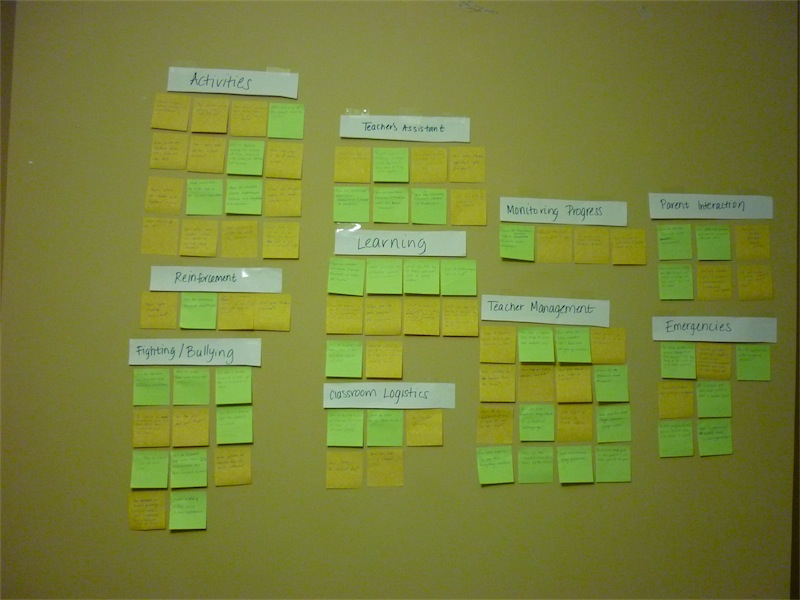
In order to organize our ideas regarding kindergarten classroom interactions and functionalities, we created an affinity diagram to represent and categorize our thoughts. Thus, we followed a process of brainstorming individually for twenty minutes by recording our ideas on notecards, then presenting our ideas to each other and looking for ones that were related, and finally sorting the notecards into groups until they had all been used. More specifically, we determined that there are seven categories that we can focus on: Activities, Reinforcement, Fighting/Bullying, Teacher's Assistants, Learning, Classroom Logistics, Monitoring Progress, Teacher's Management, Parental Interaction, and Emergencies.
Affinity Diagram
Speed Dating
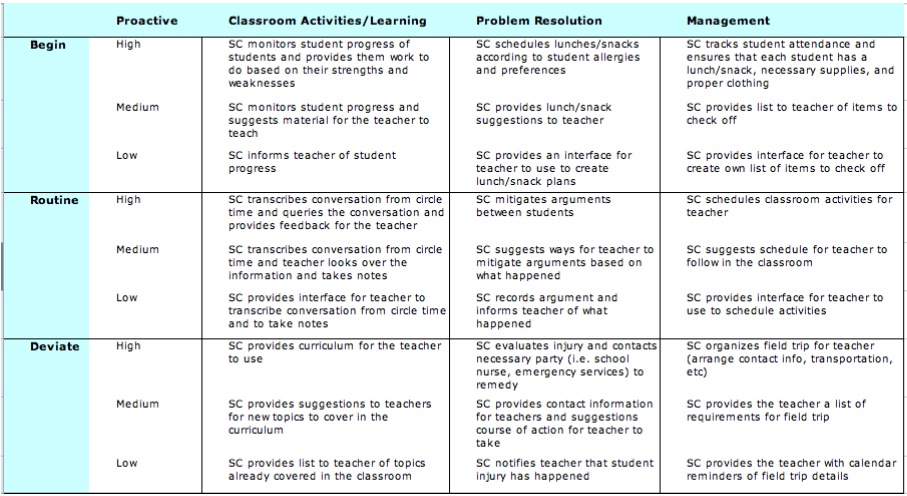
Based on the brainstorming session and our round one interviews, we generated many scenarios/concepts from our affinity diagram and placed them into a Speed Dating Matrix, a method that helped us quickly identify and understand the contextual aspects of the kindergarten classroom's social environment, without requiring a huge investment in implementation. Thus, we placed the scenarios into juxtaposed risk scnearios with situations defined in the table structure. Doing so helped us understand the context of our intelligent agent. In the matrix, we only have nine scenarios for placement and spacing reasons but in total, we came up with twenty scenarios based on the affinity diagram and initial interviews.
Speed Dating Matrix
Scenarios
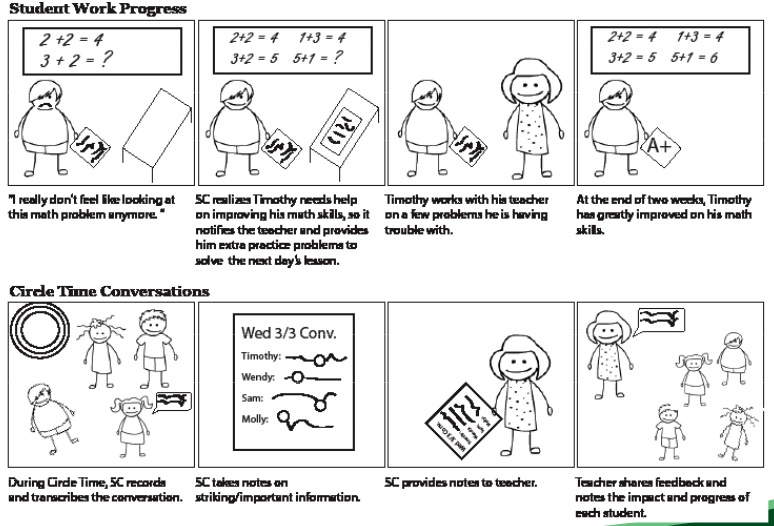
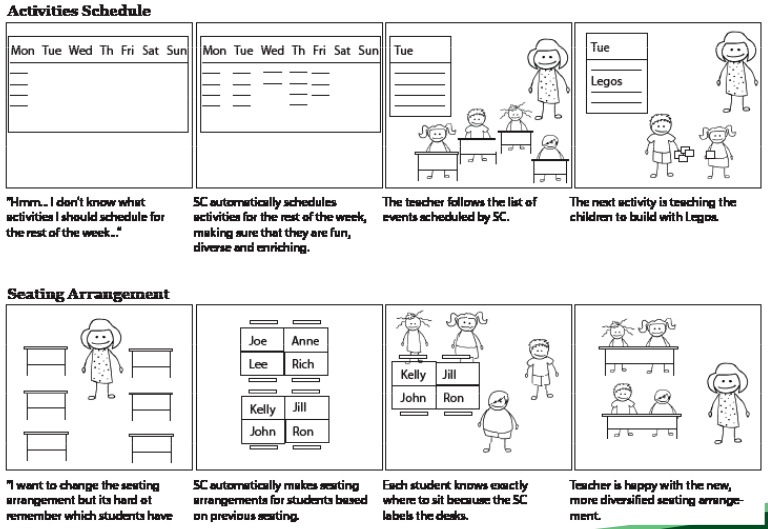
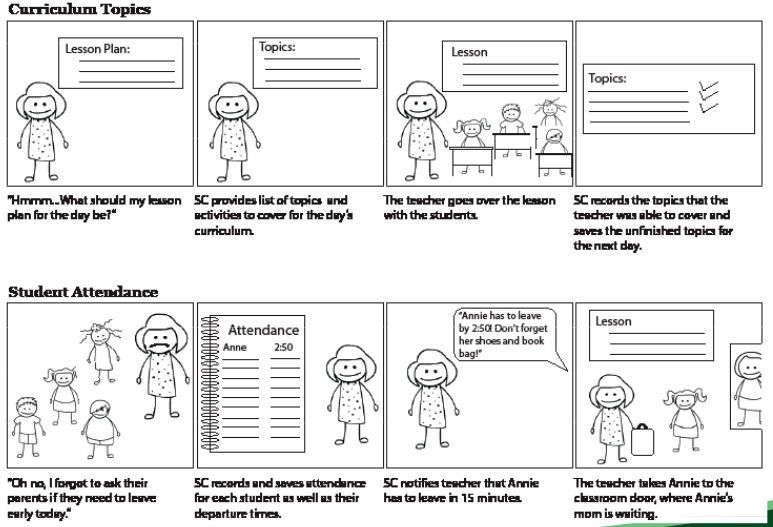
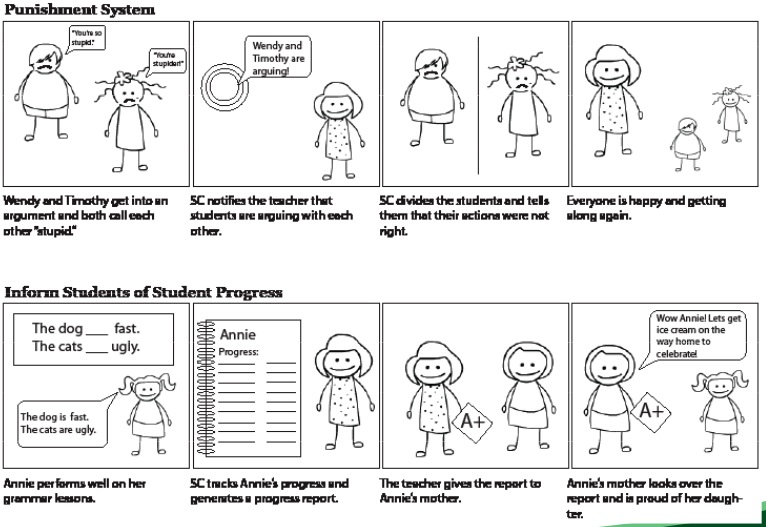
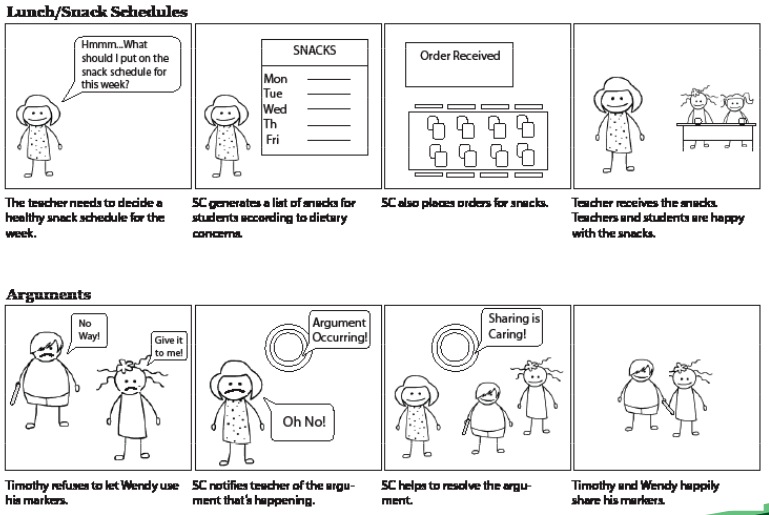
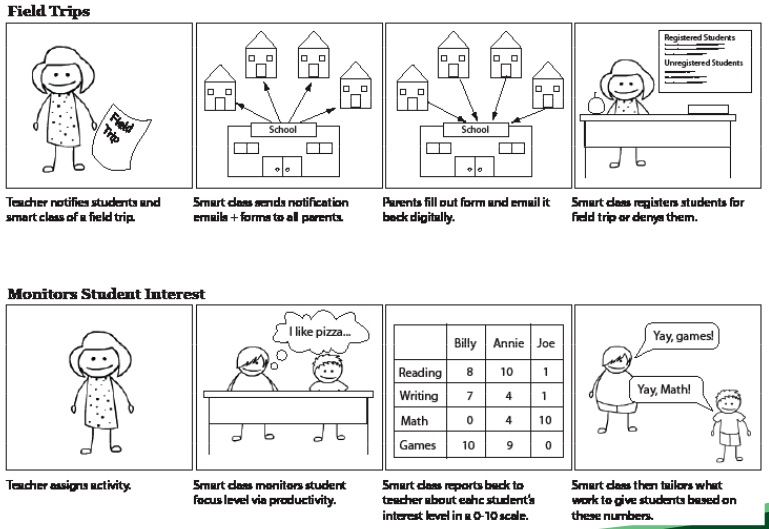
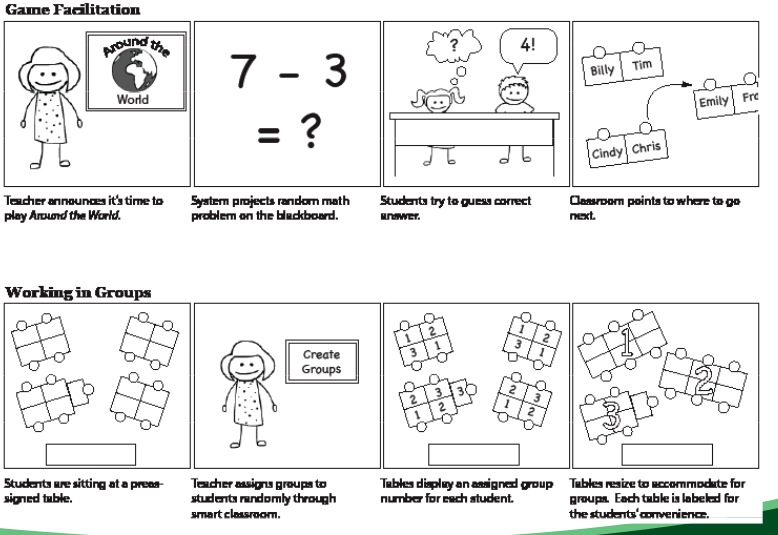
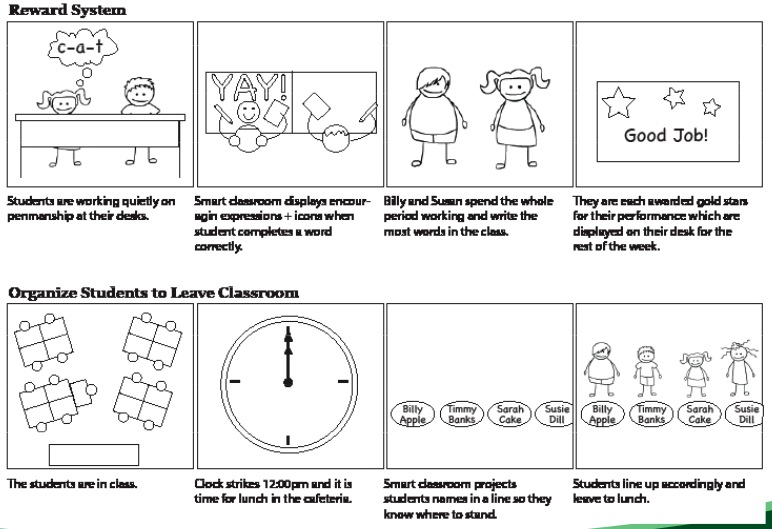
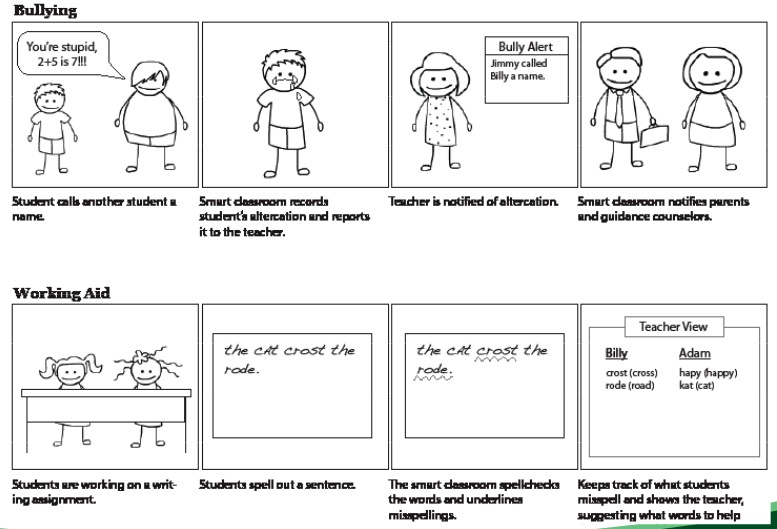
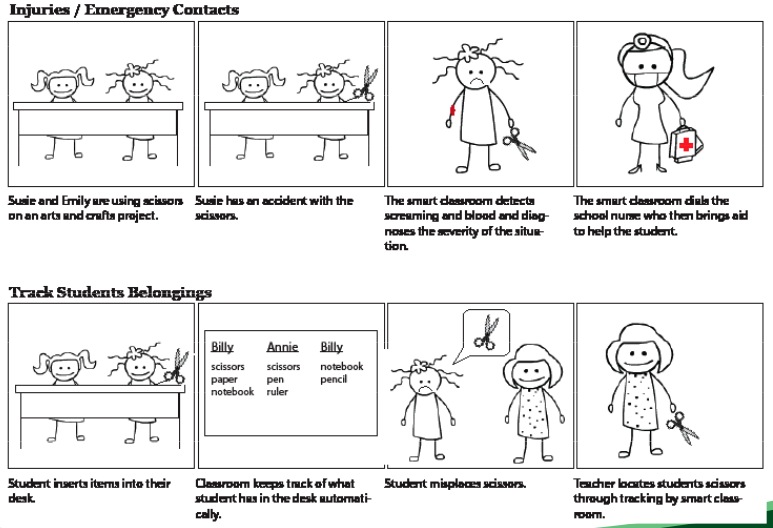
After creating the matrix, we then drew the high-level proactive scenarios based on each one that we had in the matrix. This part of the process took us a significant amount of time as two of the members handcrafted each drawing and then passed it on to the other two members, who used Adobe Illustrator software to recreate each drawing. In total, we came up with twenty scenarios.
Scenarios
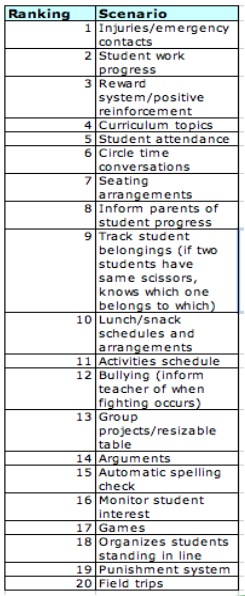
Scenario Rankings
After coming up with a list of scenarios, we presented these to one of our interviewees and asked to rank the importance of the scenarios. The results are listed below.